


Dutchess County’s Anderson Center for Autism marks 100 years of teaching and caring for profoundly challenged kids and adults.
A century ago, at a time when confinement to an institution was the prescription for children with special needs, one pioneering doctor—with a local following, a strong interest in education, and a background in human resources at Macy’s—devised a revolutionary antidote.
Victor V. Anderson, a psychiatrist, believed that seriously challenged kids would benefit from an integrated program that comprehensively addresses their educational, emotional, and social needs. So firm in his convictions, he purchased a large parcel of land in Staatsburg to create Anderson Center for Autism, opening for business in 1924, with just one student.
While Dr. Anderson’s facility morphed into more of a boarding school for well-to-do troubled teens, by the early 1970s—when two students with autism showed up—it began blossoming into the Anderson Center of today: a nurturing, typically life-long haven of living and learning for children and adults with severe intellectual and developmental issues.
In the late 1990s, the focus shifted to exclusively serving this “very specific population of kids and adults profoundly affected by complex behavioral and communication challenges,” explains Eliza Bozenski, chief development officer for Anderson Foundation for Autism, the fundraising arm of the Center, which is a 501(c)(3).
“These are individuals who need 24/7 oversight and care that they can’t receive at home,” she continues. “Parents make the difficult decision to place their children in a group setting, like Anderson, after trying everything else at home and school.”
As emotional as that is for families, Bozenski calls the Center a “joyful” place. “Our mission is to optimize quality of life. But that doesn’t mean we’re just taking care of people who are vulnerable; our goal is to bring joy to them and their loved ones.”

“We’ve become experts in the field, and we understand the importance of what we do.”
Fanning out across more than a hundred natural, woodsy acres that offer views of the Hudson River, Anderson Center for Autism is an educational and residential homebase for approximately 140 students (with another dozen or so attending day classes only) between the ages of 7 and 22. Arranged into small peer groups based on ability—their mental age is anywhere from 18 months to 3-years-old—students engage in a fairly typical school day. While the classroom setting and curriculum may resemble that of a preschool, Bozenski says “information is presented in a way that is age appropriate” out of deep respect for each student’s dignity.
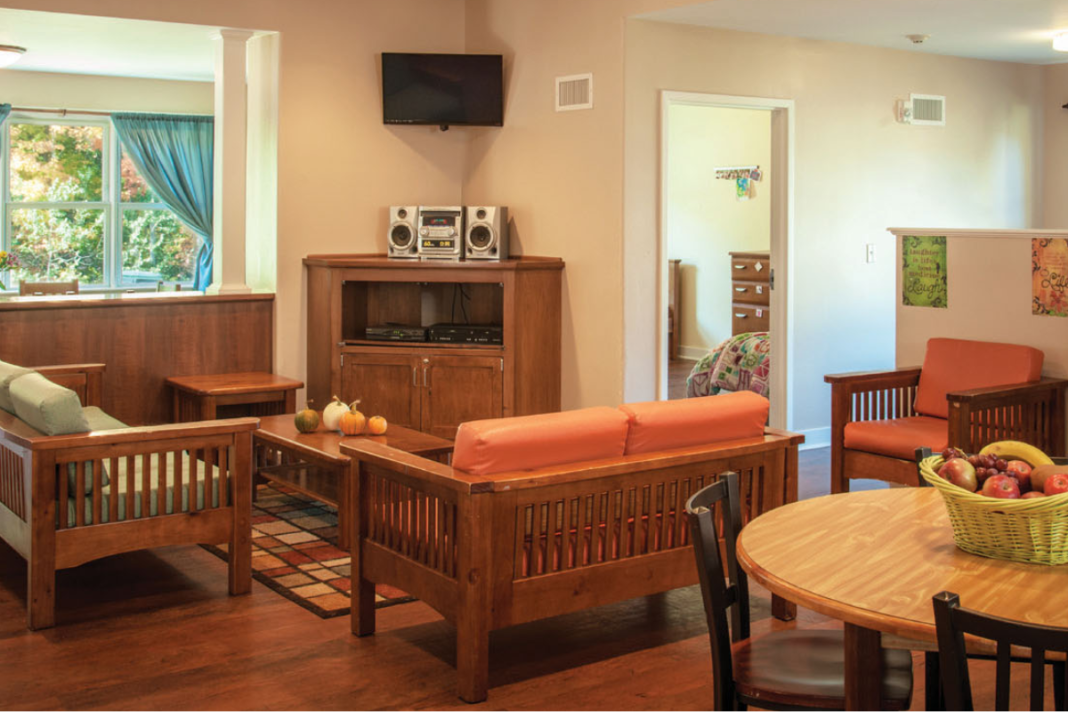
When the dismissal bell rings, students head back to home-like residences and settle into an afternoon of structured activities, from adaptive sports to crafts and music therapy, before a group dinner and bedtime in a cozy single-person bedroom decorated by their families.
Around age 21 or 22, graduates transition into one of Anderson’s 25 group homes that are situated in residential neighborhoods in Dutchess and Ulster counties (plus, a handful in Orange). Here, the full-time, structured care continues, with ongoing lessons in daily living: making a bed, setting a table, and cooking for those that are interested and able; some are brought to job sites. “Everything we do is tied to increasing their level of independence, even with the persistent need for ‘round the clock support,” says Bozenski.
After a century of such dedicated care, “we’ve become experts in the field, and we understand the importance of what we do,” says Bozenski. “We are a sustainable, fiscally sound organization, and we are pushing what we’ve learned out into the world.”
To that end, the Anderson Center Consulting & Training (ACCT) team provides on-site and remote knowledge-sharing sessions to businesses, school districts, municipalities, and families to help them enhance quality of life for autistic individuals in their communities. Similarly, Anderson Center International (ACI) invites social services practitioners from around the globe to the Staatsburg campus for a 12-to-18-month training program that arms them with the know-how and experience Anderson has acquired over the past 100 years.
“There are simply not enough programs in the world like Anderson’s,” notes Bozenski. “But we’re working to change that.” With 1,000 highly skilled employees and a century of success under their belts, they just might do it.